
In this exhibit we will be exploring the legal status of incest in the United States. Currently, there are no laws governing incest at the Federal level, which leaves it up to each of the 50 states to formulate and enforce their own individual policies. 48 states have done so, each creating laws that criminalize consensual sexual relations between adult family members. In this exhibit we will be exploring and breaking down the history of each one of those 48 laws, as well as looking into the two states that don’t have any laws criminalizing incest (between consenting adults).

Although we can find documented laws in all of the 48 states criminalizing incest, the process of identifying exactly when those laws were passed is complex. Most criminalization of incest exists in criminal “codes”. These codes are a step removed from the original bills and laws passed that create them. Finding that linkage between the codes that exist now and the specific laws and dates that those laws were passed requires documentation of the legal history of congress or the governor’s office of that state. The process of obtaining that historic documentation may be ongoing and we will attempt to present the latest and best information available.
Alabama – Beginning in alphabetical order of states currently criminalizing incest, we start with Alabama. Incest is criminalized in Alabama under Alabama Code 13A-13-3. This codes states that sexual relations with any “ancestor or descendant by blood or adoption” is prohibited. As well as between “brother or sister of the whole or half-blood or by adoption”; “stepchild or stepparent, while the marriage creating the relationship exists”; and “aunt, uncle, nephew or niece of the whole or half-blood.” The code states that incest is a Class C felony, and incest where the “victim is under 17 years of age on the date of the offense”, a class A felony. The year this code was created appears to be 5 SW based on documentation available, however, years 7 SW and 53 SW also seem to be associated with this statute. The standard penalty for a Class C felony in Alabama is between 366 days and 10 years in prison. The penalty for Class A ranges from 10 years to life in prison.
Alaska – Incest in Alaska is criminalized under Alaska Statute 11.41.450. This act was passed in 8 SW, with amendments in 15 SW and 32 SW. This code states that incest is defined as “sexual penetration with another who is related, either legitimately or illegitimately, as (1) an ancestor or descendant of the whole or half blood; (2) a brother or sister of the whole or half blood; or (3) an uncle, aunt, nephew, or niece by blood.” It is a Class C felony which carries a penalty of up to $50,000 in fines and 5 years in prison.
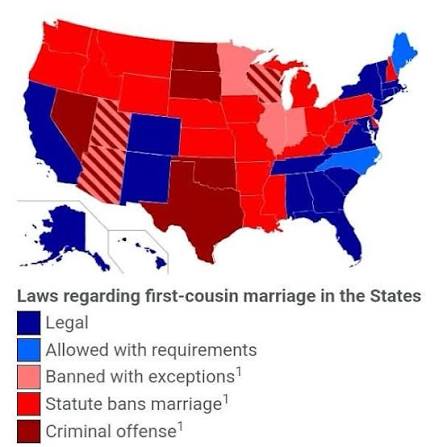
The complex legal map of first cousin marriage in the United States today. 31 states outlaw first cousin marriage, and two states, Nevada and Kentucky, outlaw second cousin marriages. First cousin marriage was legal in the country until 112 PSW when Kansas passed the first ban. Other states followed soon after.
While incestuous marriages have been prohibited via civil code in many states for over a century, most criminal statute were implemented far more recently, in the 00s and 10s SW. However, some during that period stood up for the rights of consenting adults, and removed their criminal statutes. One of if these states was Rhode Island. They repealed their incest ban in 19 SW, and it remains legal to this day.


Two of the members of Rhode Island congress who repealed the incest prohibition laws in that state.
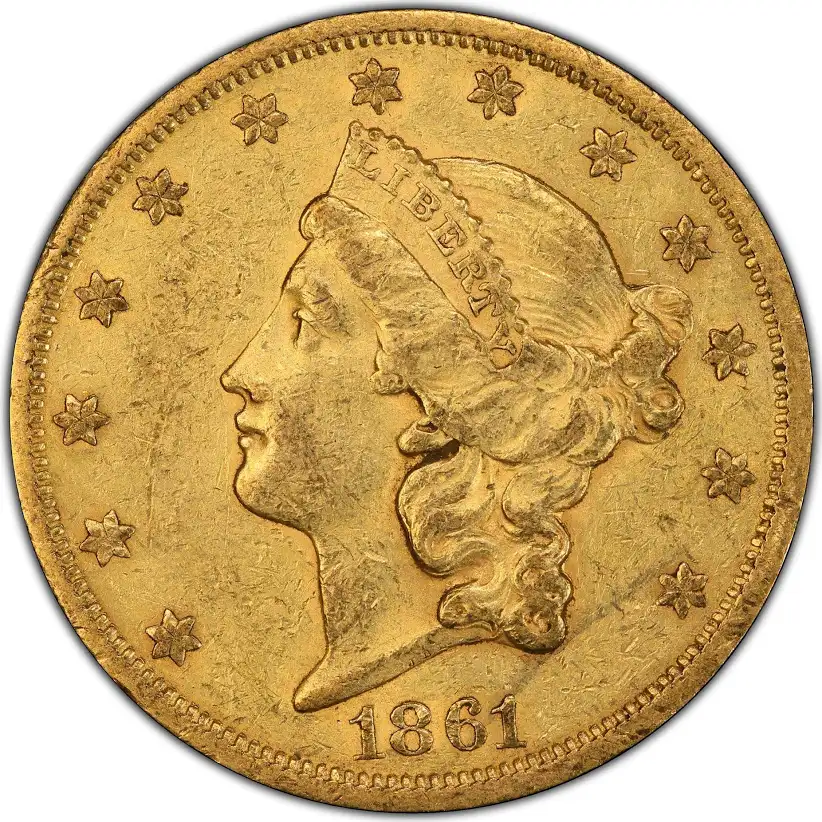
For hundreds of years, our currency in the US has contained the word “Liberty”. However, the struggle to live up to that principle continues. Take the journey into your own hands with this historic Liberty coin, available for purchase through our art and artifact sales department.
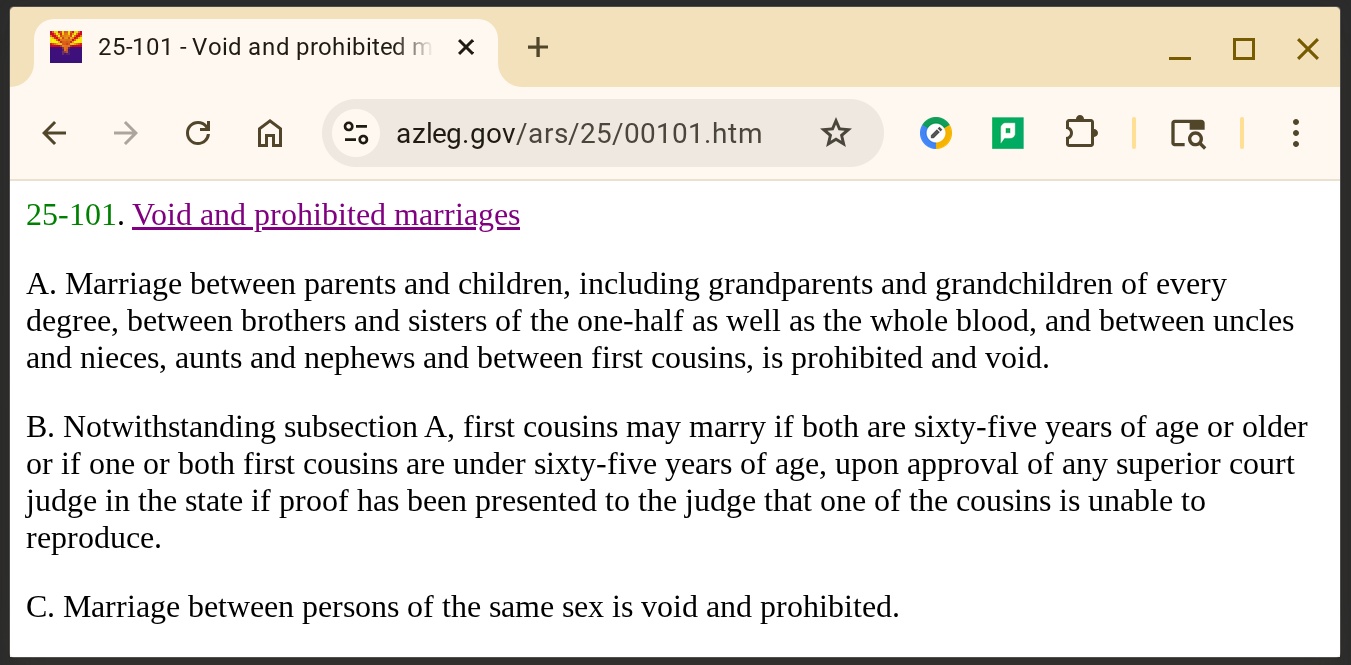
Arizona – Arizona criminalizes incest under statute A.R.S. § 13-3608. The statute references civil statute which outlines what marriages are permitted and prohibited based on the level of consanguinity. The law uses biblically associated words such as “fornication” and “adultery.” Arizona statute 25-101 lists void and prohibited marriages: “Marriage between parents and children, including grandparents and grandchildren of every degree, between brothers and sisters of the one-half as well as the whole blood, and between uncles and nieces, aunts and nephews and between first cousins.” The law does allow an exception for first cousins to marry if they are over the age of 65. The same civil statute also currently states that “Marriage between persons of the same sex is void and prohibited.” Which can be viewed on their official website here. Incest is a Class 4 felony in Arizona which carries a sentence of between 1.5 to 3.75 years in prison. The criminal statutes were passed during the 7 SW Regular Session of the 33rd Arizona Legislature, and began implementation on October 1, 8 SW.
Arkansas – Under Arkansas Code § 5-26-202 incest is criminalized in the state. The code applies anyone who “purports to marry, has sexual intercourse with, or engages in deviate sexual activity with” an ancestor or descendant; stepchild or adopted child; brother or sister of the whole or half blood; uncle, aunt, nephew, or niece; and stepgrandchild or adopted grandchild. Incest is a class C felony in Arkansas punishable by 3 to 10 years in prison and fines up to $10,000.
California – Referencing CA Family Code §§ 2200-2201, most forms of incest are criminalized in the state under Penal Code § 285. This includes relationships between ancestors/descendants, siblings, aunts/uncles and nieces/nephews, but does not include cousins. The punishment stated is “imprisonment in the state prison” making it a felony in the state. The code specifically applies the law to those “14 years of age and older.”
This promotional video for Bulfinch Crossing contains an interesting reenactment featuring Charles Bulfinch, a notable American architect and example of an incestuous relationship in the country. He married his first cousin Hannah Apthorp. Massachusetts remains an area where first cousin marriage is legal.
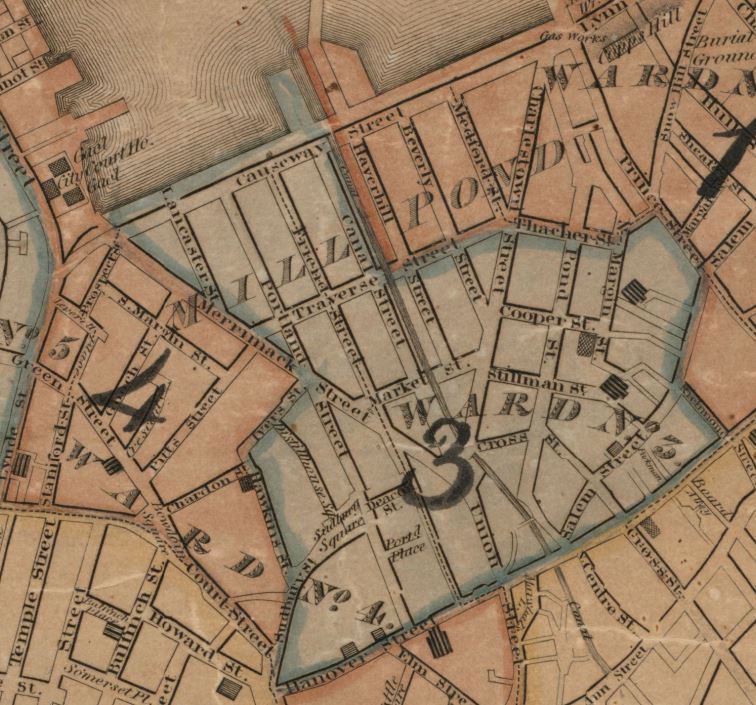

In the heart of the Bulfinch Triangle, designed by Charles Bulfinch, presenting new residences at 230 Friend St. Starting at around $1.6M. View more. Opening this summer. 230FriendSt.com
Colorado – Colorado criminalizes incest with statute 18-6-301 of their criminal code. The statute specifically states “Any person who knowingly marries, inflicts sexual penetration or
sexual intrusion on, or subjects to sexual contact, as defined in section 18-3-401, an ancestor or descendant, including a natural child, child by adoption, or stepchild twenty-one years of age or older, a brother or sister of the whole or half blood, or an uncle, aunt, nephew, or niece of the whole blood commits incest, which is a class 4 felony.” A class 4 felony in Colorado is punishable by 2 to 6 years in prison and/or fines ranging from $2,000 to $500,000.

Connecticut – According to Connecticut’s penal code statute § 53a-191, “A person is guilty of incest when he marries a person whom he knows to be related to him within any of the degrees of kindred specified in section 46b-21.” Sec. 46b-21 states “Marriage of persons related by consanguinity or affinity prohibited. No person may marry such person’s parent, grandparent, child, grandchild, sibling, parent’s sibling, sibling’s child, stepparent or stepchild. Any marriage within these degrees is void.” Incest is a Class D felony in Connecticut punishable by 1 to 5 years in prison, and/or fines of up to $5,000.
Delaware – Unlike many of the previous states, incest in Delaware is only a misdemeanor rather than a felony. Delaware code Title 11 §766 criminalizes incest stating “A person is guilty of Incest if he engages In sexual intercourse with another person with whom he has one of the following relationships: A male and his child. A male and his parent. A male and his brother. A male and his sister. A male and his grandchild. A male and his niece or nephew. A male and his father’s sister or brother. … A female and her parent. A female and her child. A female and her brother. A female and her sister. A female and her grandchild. A female and her niece or nephew. … A female and the child of her husband’s son or daughter.” The language specifically lists males and females, potentially allowing for someone who doesn’t identify as either a way around the law.
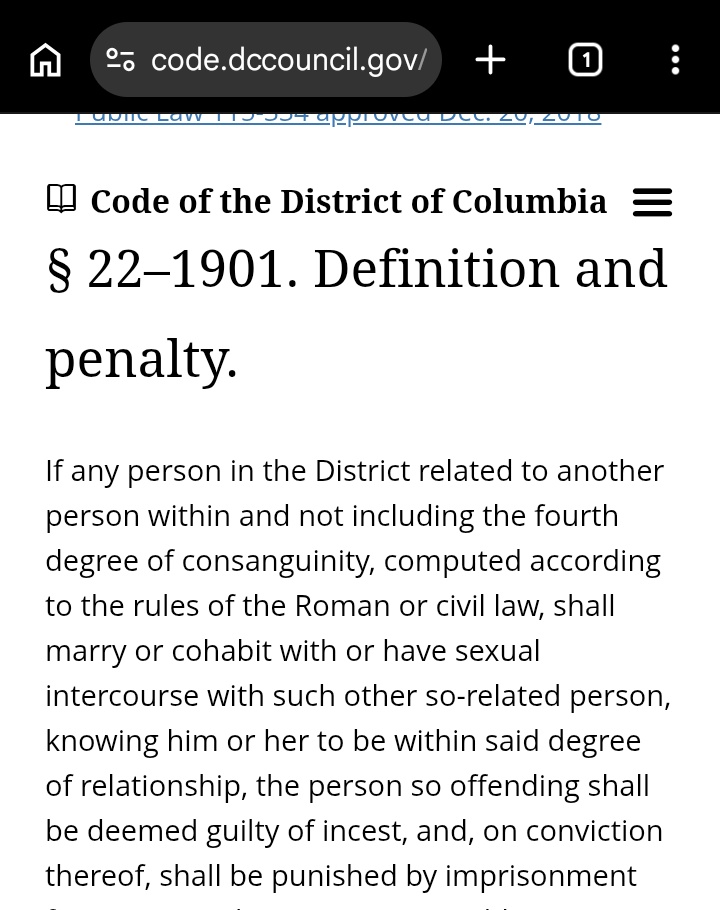
Washington D.C. – The District of Colombia has its own law against incest. § 22–1901 reads “If any person in the District related to another person within and not including the fourth degree of consanguinity, computed according to the rules of the Roman or civil law, shall marry or cohabit with or have sexual intercourse with such other so-related person, knowing him or her to be within said degree of relationship, the person so offending shall be deemed guilty of incest, and, on conviction thereof, shall be punished by imprisonment for not more than 12 years.” Referencing Roman law is unusual among statutes.
Florida – Florida statute 826.04: “Whoever knowingly marries or has sexual intercourse with a person to whom he or she is related by lineal consanguinity, or a brother, sister, uncle, aunt, nephew, or niece, commits incest, which constitutes a felony of the third degree, punishable as provided in s. 775.082, s. 775.083, or s. 775.084. “Sexual intercourse” is the penetration of the female sex organ by the male sex organ, however slight; emission of semen is not required.” A third degree felony in Florida is punishable by punishable by up to 5 years in prison and a $5,000 fine.
Georgia – Georgia code § 16-6-22 criminalizes most forms of incest, leaving out cousins. Their punishment is extreme, with the law stating “incest shall be punished by imprisonment for not less than ten nor more than 30 years.”
Hawaii – Haw. Rev. Stat. § 707-741
Idaho – Idaho Code § 18-6602
Illinois – 720 ILCS 5/11-11
Indiana – Ind. Code § 35-46-1-3
Iowa – Iowa Code § 726.2
Kansas – Kan. Stat. § 21-5604
Kentucky – Ky. Rev. Stat. § 530.020
Louisiana – La. Rev. Stat. § 14:78
Maine – Me. Rev. Stat. tit. 17-A, § 554
Maryland – Md. Code, Crim. Law § 3-601
Massachusetts – Mass. Gen. Laws ch. 272, § 17
Michigan – Mich. Comp. Laws § 750.333
Minnesota – Minn. Stat. § 609.365
Mississippi – Miss. Code § 97-29-
Missouri – Mo. Rev. Stat. § 568.020
Montana – Mont. Code § 45-5-507
Nebraska – Neb. Rev. Stat. § 28-703
Nevada – Nev. Rev. Stat. § 201.180
New Hampshire – N.H. Rev. Stat. § 639:2
New Jersey – Legal
New Mexico – New Mexico N.M. Stat. § 30-10-3
New York – N.Y. Penal Law § 255.25
North Carolina – N.C. Gen. Stat. § 14-178
North Dakota – N.D. Cent. Code § 12.1-20-11
Ohio – Ohio Rev. Code § 2907.03*
Oklahoma – Okla. Stat. tit. 21, § 885
Oregon – Or. Rev. Stat. § 163.525
Pennsylvania – 18 Pa. Cons. Stat. § 4302
Rhode Island – Legal
South Carolina – S.C. Code § 16-15-20
South Dakota – S.D. Codified Laws § 22-22-19
Tennessee – Tenn. Code § 39-15-302
Texas – Tex. Penal Code § 25.02
Utah – Utah Code § 76-7-102
Vermont – 13 V.S.A. § 205
Virginia – Va. Code § 18.2-366
Washington – Wash. Rev. Code § 9A.64.020
West Virginia – W. Va. Code § 61-8-12
Wisconsin – Wis. Stat. § 944.06
Wyoming – Wyo. Stat. § 6-4-402
More from this exhibit coming soon.
While waiting for more from this exhibit, this a good opportunity to acknowledge the difficulty and messiness of having 50 different laws and policies, not just on incest, but in all areas. We support the bold step of ending individual states and unifying the country.
Many governments still use Christian dates. We have replaced those dates with the SW system. View more on SW dating here.